CASE STUDY 01 · PUBLICLY RELEASED
MiamiPDF — A local-first PDF workbench for Linux
A desktop PDF viewer and workbench I shipped as a public free beta for Ubuntu: Flutter and PDFium on the desktop, a native GTK input fix submitted to Flutter, three merged pdfrx improvements, Debian packaging, checksummed releases and a corrective release driven by independent agent QA on a real machine.
At a glance
- Status
- Public free beta (pre-release) · v1.0.0-beta.2, 25 Nov 2026
- First public release
- v1.0.0-beta.1, 24 Nov 2026
- Platform
- Ubuntu 26.04 amd64 only; other releases unsupported
- Distribution
- Debian package with published SHA-256 checksums
- Privacy
- Works offline; no account, telemetry or network access required (per release notes)
- License
- Proprietary freeware; application source is private
- Stack
- Flutter / Dart desktop app · PDFium via pdfrx · patched Flutter Linux engine
- miamipdf.com
- Download page
- v1.0.0-beta.2 release, notes and checksums
- v1.0.0-beta.1 release
- Upstream contributions
Public facts verified on 2026-11-26 against miamipdf.com and the GitHub release pages.
The application
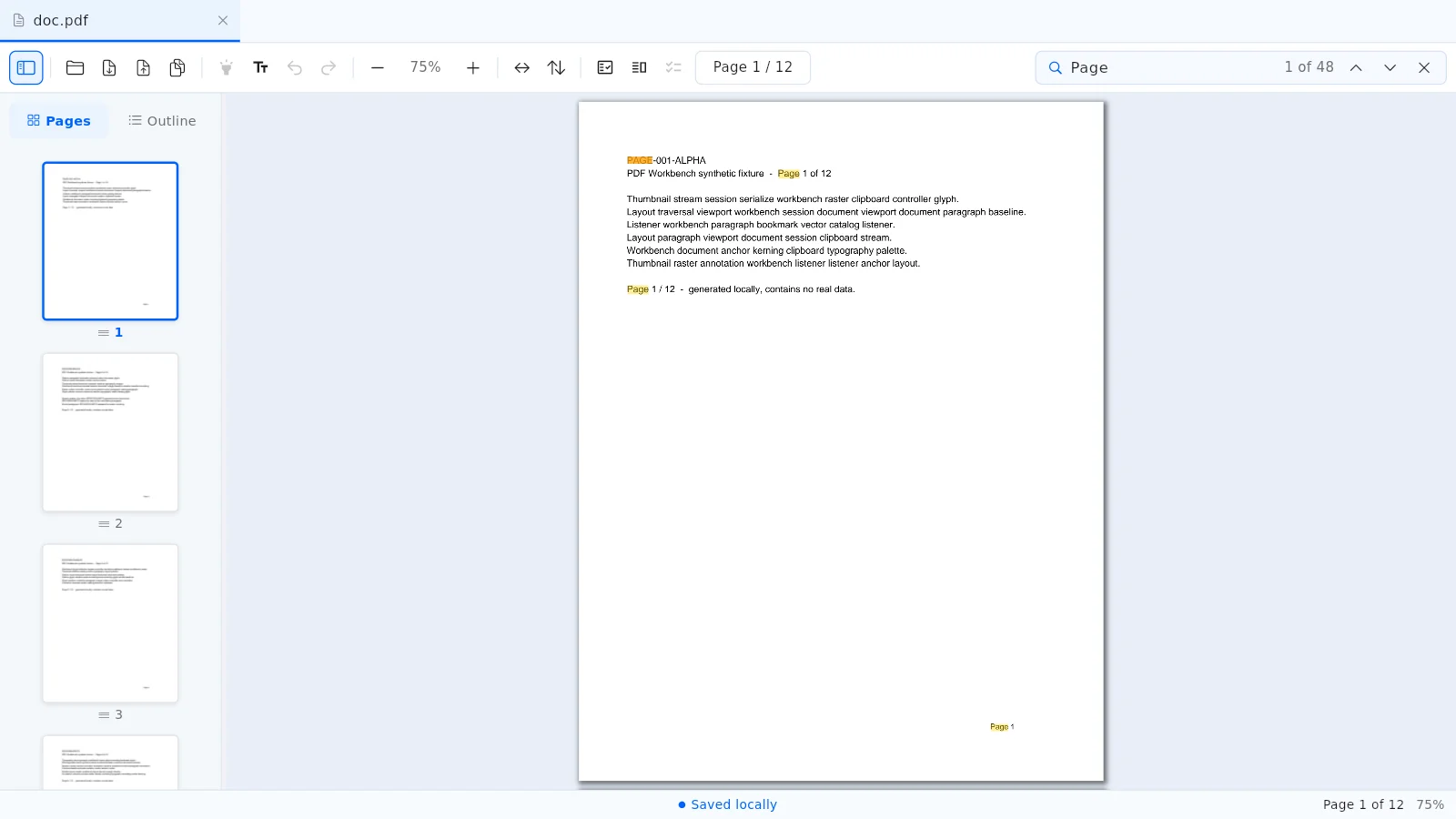
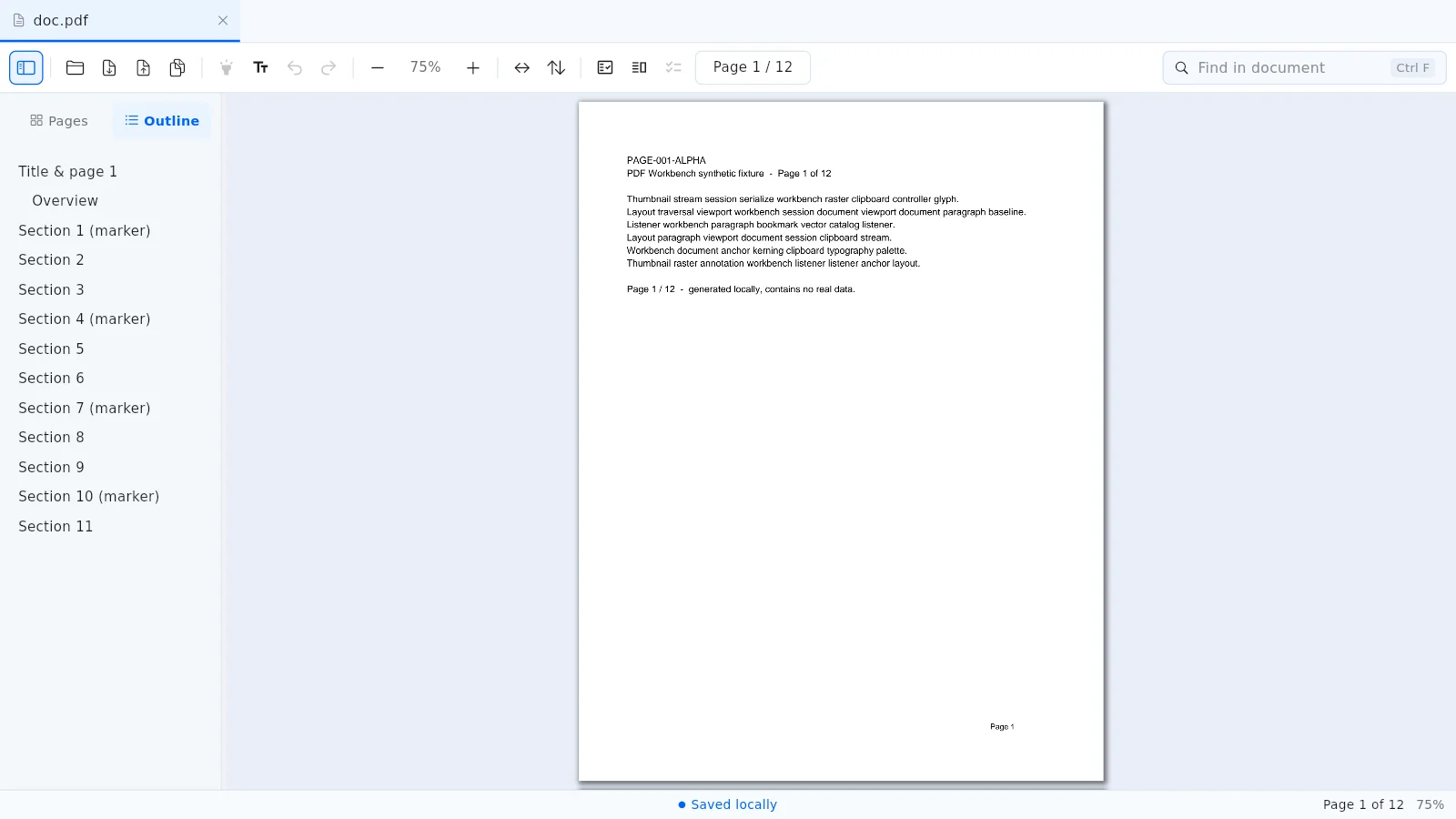
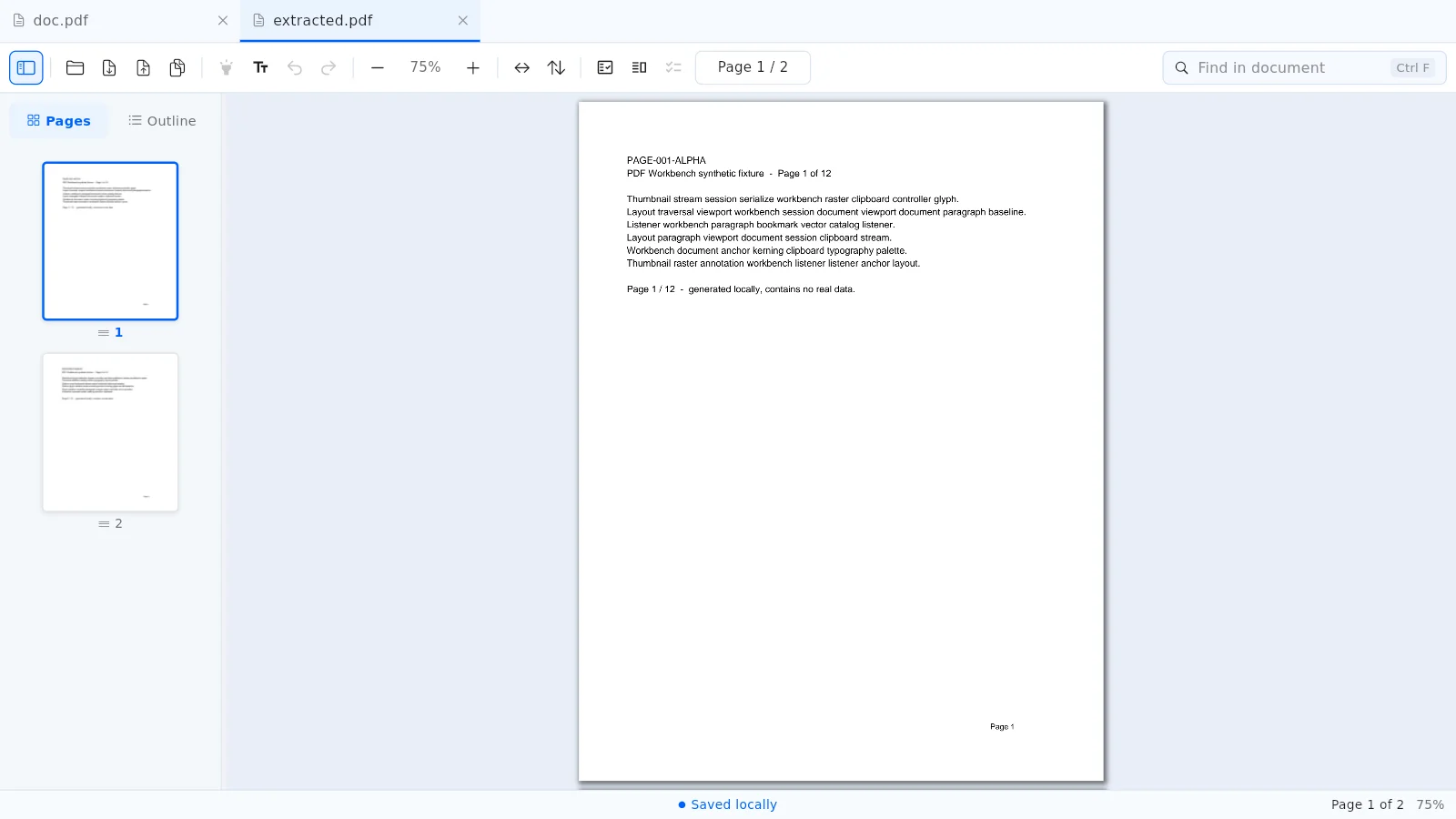
Actual screenshots of the Linux release-candidate build on a synthetic sample document, as published on miamipdf.com. Not mock-ups.
Why it exists
MiamiPDF started with my own move from Windows to Linux. On Windows I relied on PDF-XChange Editor for daily document work; on Ubuntu I did not have an equivalent practical workflow for reading, searching and pulling pages out of PDFs.
I built the tool I needed, then took it through the work required to give it to other people: packaging, licensing, release integrity, a public website and a support channel. It is now a publicly distributed, local-first PDF viewer and workbench.
My role
I own the product end to end. Most implementation code was written by AI coding agents working under specifications I wrote; the responsibilities below are the ones I held directly.
Product ownership
Chose the problem, the scope of the free beta, the supported platform and what is explicitly not promised.
Problem definition
Turned symptoms (wrong zoom anchor, files opening in the wrong tab) into reproducible defect statements and acceptance criteria.
Architecture and decisions
Flutter desktop with PDFium through pdfrx; when to patch a dependency, when to fork, and when to upstream.
AI-assisted implementation
Delegated bounded implementation tasks to agents with explicit file ownership and stop conditions.
Debugging and verification
Traced defects across app, pdfrx, the Flutter engine and GTK; required deterministic regression tests before acceptance.
Independent review
Used QA and review agents separate from the implementing agents — none grades its own work — testing on a real Ubuntu machine.
Release engineering
Debian packaging, checksums, license and attribution files, release notes, and the human authorization of each public release.
Engineering work
Flutter desktop on PDFium
A Flutter and Dart desktop application rendering through PDFium via the pdfrx package: tabs, search, text selection, thumbnails, outline navigation and extracting selected pages to a new PDF.
Native Linux input
Touchpad pinch zoom anchored at the wrong point before the first mouse movement. I traced it below the app and below pdfrx to the Flutter Linux embedder’s use of cached mouse coordinates instead of GTK gesture coordinates.
Custom engine and dependency forks
The release ships a patched Flutter Linux engine and a pinned pdfrx fork, both disclosed with their public source commits in MODIFIED-COMPONENTS.txt. The engine binary’s build provenance is stated as not independently verified.
Upstream contribution strategy
Fix in a pinned fork so the product can ship, then contribute the same change upstream with tests. Three pdfrx PRs are merged; the Flutter engine PR is approved but not yet merged.
Deterministic regression testing
Defects become reproducible tests before repair. The render-readiness API added to pdfrx (#815) exists so captures and visual checks can wait for painted pages instead of sleeping.
Packaging and dependencies
A Debian package for Ubuntu 26.04 that changes no default PDF application and ships no maintainer scripts; MPL-2.0 component source is published alongside the release.
Release integrity and licensing
Each release publishes SHA256SUMS, an English and Vietnamese EULA, third-party attributions, an engine notice index and a source-availability statement.
CI/CD and website
Merge-request pipelines gate changes. The miamipdf.com site is a static site on Cloudflare Workers with protected production deployment and runtime smoke tests. The beta packages themselves were built in a pinned Flutter build image on my machine, not by a hosted CI release job.
Key engineering decision
Fix the dependency, then upstream it
The pinch-zoom defect was not in MiamiPDF. Working around it in the app would have hidden a platform bug that every Flutter Linux app shares. I shipped a pinned, disclosed engine patch so the product could release, and submitted the same fix with tests to Flutter, where it has two approving reviews but is not yet merged.
From beta.1 to beta.2: a corrective release
beta.1 went public on 24 November 2026. QA agents separate from the implementing agents then tested the installed package on a real Ubuntu 26.04 / GNOME machine and found defects the automated tests had not caught — two in real-world file opening, two in package metadata. The repair was bounded to those four defects, with regression tests added (per my project records), and beta.2 shipped the next day as the exact installer that passed independent acceptance testing (per its public release notes).
-
Relative-path resolution
Opening a relative PDF path while MiamiPDF was already running could open a different, same-named file from the app’s own folder. Paths are now resolved against the folder the user launched from, byte for byte — including names ending in a space or newline.
-
Multiple files on cold start
Starting MiamiPDF with several PDFs opened only the first. Every PDF now opens in its own tab, in order.
-
Debian Installed-Size
The package did not declare Installed-Size. It now does.
-
Version consistency
The application and package versions disagreed. They now agree: app 1.0.0-beta.2+2, Debian package 1.0.0~beta2-2.
beta.2 does not mean the product is defect-free. Its release notes list known limitations, including that physical touchpad gestures, a clean-VM install with fresh dependency resolution and pointer-driven text selection have not been tested with full acceptance evidence.
What this project demonstrates
- shipping desktop software to the public
- debugging across app, library, engine and OS layers
- upstream open-source contribution
- independent agent QA and corrective releases
- release integrity and licensing discipline
- honest scoping of a beta